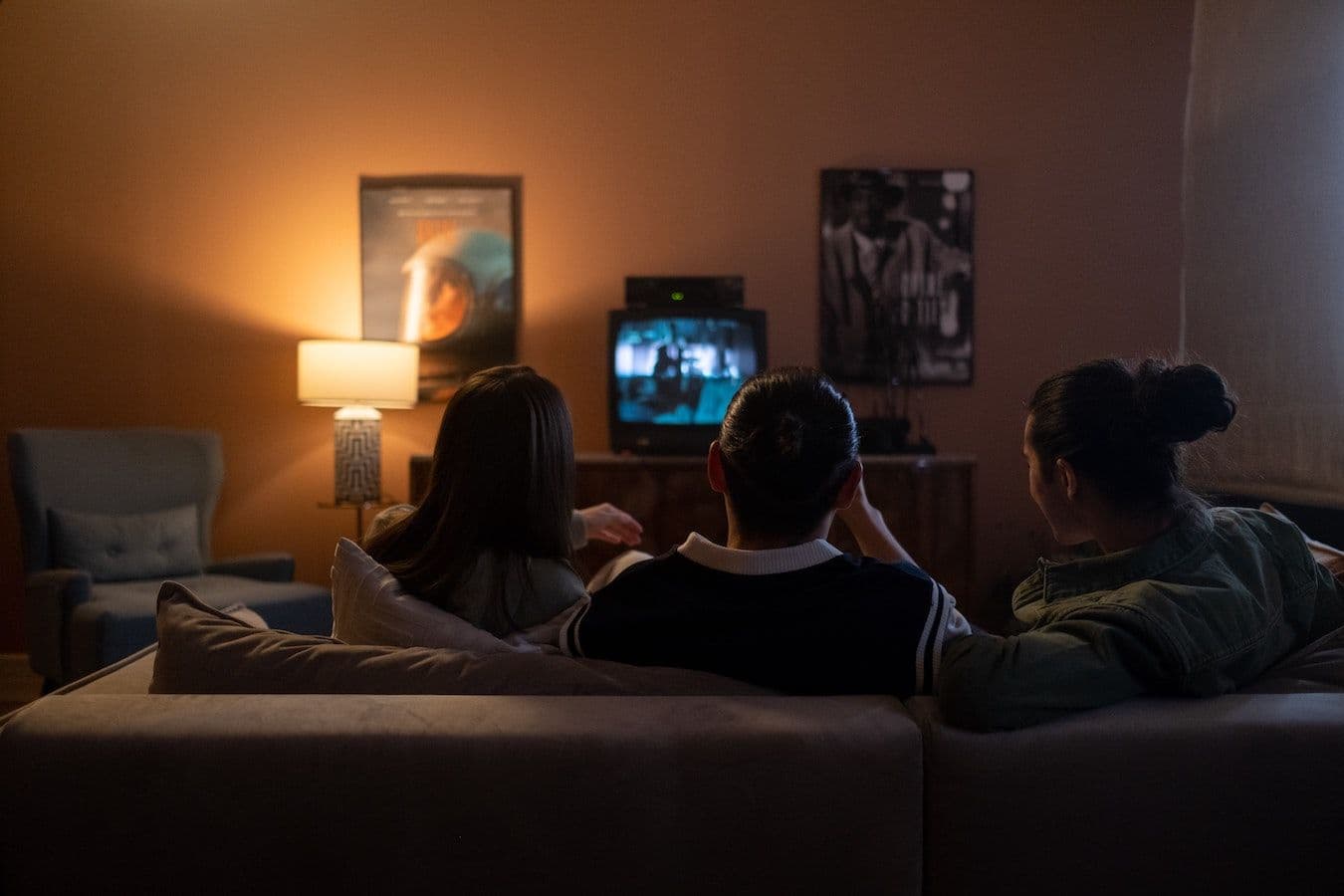
Load up on your favourite flicks while we explore cinematherapy, and what utilising it looks like in the therapy room
Whether you’re partial to the classics, have a fondness for thrillers, or enjoy escaping into fantasy or romance, there’s a magic often captured in films that goes beyond an entertaining way to while away a few hours. It might not even be something you’re conscious of, but so many of us turn to movies for their power to help heal us, soothe us in tough times, and, sometimes, even help us confront parts of our lives we’ve tried to forget.
In fact, since the 1970s, films have actually been incorporated into clinical therapy, as a means for individuals to observe representations of their emotions, mental health conditions, and lived experiences on-screen.
What is movie therapy?
Cinematherapy, as it’s formally known, is an artistic technique where individuals watch stories featuring characters dealing with similar issues to what they’re facing, as a means to help them detach from their current situation, and process it objectively. Patients are encouraged to immerse themselves in the story to help process past traumas in a less intrusive way.
Exploring the effectiveness of this practice, psychologists examined 38 studies for Frontiers of Psychology in 2022, and found that 36 trials reported a positive effect as a result of the treatment. Across the years, cinematherapy has been used to help treat everything from phobias to depression, relationship problems and addiction – though it’s worth exercising caution with any form of trauma processing tool, and seeking the support of a professional to help guide you along the way.

In the therapy room
Alongside mainstream and independent films, documentaries were also shown to help individuals understand themselves through a third-person perspective, so there are a lot of options for what might resonate or appeal most to you. Tina Chummun, a person-centred psychotherapist, often refers to films and TV shows in her practice as a trauma specialist to help individuals create more empathy towards their personal situation.
“We are neurobiologically hardwired that, unless we work on our awareness and acceptance of what’s going on for us, we will always project it onto somebody else,” she explains. “That’s why it’s easier to be empathetic with your friend who’s going through some trauma crisis, than it is when you go through the same situation.”
With one client, who was a victim of childhood domestic violence, Tina used the Netflix series You to help him understand his behavioural responses as an adult. “The character, Joe Goldberg, has gone through childhood trauma that manifests in controlling behaviour to keep himself safe,” she explains. “It is extreme for Joe (my client doesn’t murder people), but I use that example for how psychological behaviour can come out in adulthood.”
During their sessions, Tina also referred to another Netflix show called Ratched, because one scene depicts how trauma can become the lens that you see your life through, if you don’t work to address it.
“[The character] Mildred is sitting in the theatre watching a puppet show tailored for children, and everyone else is laughing, but her whole perspective is clouded by her upbringing,” says Tina. “She’s not seeing the same show as everyone else, which is why she stands up and screams, ‘How can you do this? How could you show this to children?’”
The character is unable to be present or joyful, as she’s still processing the horrors of her past, which leaves her feeling isolated from those around her.
Tina emphasises the importance of using this form of exposure safely, and says the best way to utilise cinematherapy is with a therapist, as it can be overwhelming to watch triggering scenes alone. For example, one of her clients doesn’t watch dramas featuring knife violence, as they witnessed similar violence at a young age. For now, Tina acknowledges that it’s safer for her wellbeing to avoid those kinds of graphic scenes, as she knows her client is not psychologically ready to revisit those memories and emotions yet.
Comfort viewing
This form of therapy can be helpful in the right headspace, but there are also mental health benefits to be found in re-watching your favourite films and series during challenging times. I personally experienced this.
When I was 16, I watched Men in Black III every night for the three months after my dad died. At a time when I was drowning in grief, feeling detached from everyone around me, and unable to process the weight of the depression settling in, giant alien fish and Tommy Lee Jones’s dry humour were about as far from my reality as I could get. Escaping into another world couldn’t heal my pain, but it could momentarily suspend the profound despair I was feeling, as it removed it from the centre of my consciousness.
There’s an element of self-preservation in this practice that can provide a temporary relief through distraction and nostalgia, but it can also be a sign that you might not be ready to confront what is happening to you yet. One of Tina’s clients insists on having the TV on at all times, as she can’t be alone with her thoughts. Tina encourages her client to keep doing it as, for now, it’s a strategy that works for her. It serves a purpose, and removing it would only be distressing, if not replaced with something else.
“In its own way, a comfort watch is a coping mechanism, and that’s OK,” Tina continues. “I wouldn’t be judgemental of yourself if you do that, especially if you’re self-aware of why you’ve got that movie on, and why you’ve watched it so many times.”
There’s also the added benefit of the more you watch something, the more likely you are to resonate with different elements of the story, based on what’s currently happening in your life. If you’re watching a film about a breakup as you’re going through one, you’ll have a different interpretation of the film than someone in a happy relationship.
Conversation starters
Therapy can be daunting, but bringing movies into the conversation can sometimes help ease into a more informal way of talking about personal struggles. If you want to start using movies as a form of therapy, Tina suggests: “You are well within your rights to say to your therapist that you want to speak about a particular movie, because it will help you to talk about your process more. Therapy is your space. You own it.”
It’s difficult to prescribe movies for specific conditions, but there are iconic titles that often come up in Tina’s sessions, such as Eat, Pray, Love, Sliding Doors, and Wild due to the conversations they spark about identity and spirituality. However, scenes that resonate with individuals can vary from person to person.
Back in early 2020, I tuned into Marvel’s first limited series on Disney+, WandaVision, and it explored the all-consuming grief and rage Wanda (Elizabeth Olsen) felt in the wake of Vision’s (Paul Bettany) death after Avengers: Endgame. It was a surprising form of therapy for me: watching a rage-fuelled woman express her grief so powerfully when I couldn’t find ways to externalise my own feelings as a teenager – I lacked both the language to do so, as well as her magical abilities.
Films open a window into our souls, and when they are explored safely in therapy, they can provide life-changing emotional support that makes you feel represented, comforted, and ready to process the memories they trigger for you.
So, know that whether it’s a go-to comedy watch when you need some comfort, or really resonating with a character in a show you’ve never seen before, and being curious about why, movies might just hold the ticket to helping you understand and explore your experiences through a whole new lens.



Find a professional today
Try our guided search tool, we can connect you with over 20,000 professionals.