Why taking time to recharge should be a non-negotiable
updated on Jul 27, 2026

Rest isn’t passive, it’s something we can learn. Here, we’re exploring practical strategies for reframing your relationship with restorative time
Have we lost touch with what real rest is, and what it feels like?
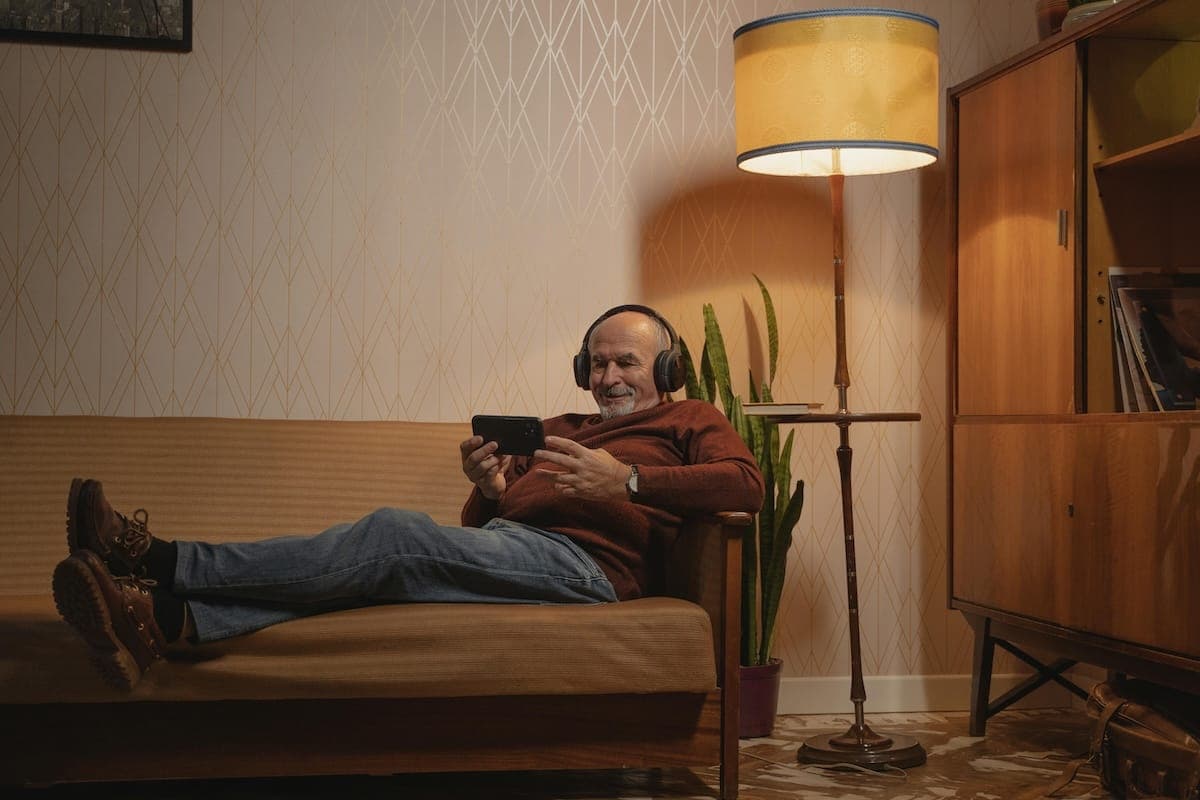
We might think of rest as doing nothing. But doing nothing while stressed or overstimulated rarely restores us. We stop working, but we don’t really stop. We scroll, consume, catch up, think ahead, and never really feel present. The online world is so accessible that holding and checking our phones has become a habit, so we never fully disconnect or truly rest.
Somewhere along the way, being busy and ‘always on’ has become a badge of honour – historically, the workplace has conditioned us to think like this. And rest has started to feel like something that needs to be earned.
Yet rest is a non-negotiable, which enables us to function.
It’s time for a rest revolution
This topic is important now because people are so exhausted. Not just physically, but emotionally, mentally, spiritually and relationally. In fact, one in eight adults in the UK says they feel tired all the time, according to a recent YouGov survey.
As humans, we’re trying to sustain a pace we were never designed to live with long-term. Add to this the uncertainty around global events, and we end up worried and wired. And this makes it all the harder to rest and recharge.
It’s a trend I’m seeing increasingly with women I coach. They’re often very capable and caring, and have always worked hard. But as the demands on their time increase, they struggle to find time to rest properly.
Their nervous systems are conditioned to always being on, so their batteries can’t fully recharge. So they start feeling disconnected and tired in a way that sleep can’t fix, because sleep is only one way to restore energy. In her book Sacred Rest, Dr Saundra Dalton-Smith outlines seven types of rest: Physical, mental, spiritual, sensory, creative, emotional, and social.
And rest doesn’t have to be passive; it can look surprisingly active. Walking, being outside, laughing, being quiet, or having space are all forms of rest. It’s anything that lets your nervous system unclench a little.
I feel passionately about this because I’ve experienced it. I previously worked in a very high-stress environment that affected my sleep and led to panic attacks. At the same time, I was trying to conceive. I was diagnosed with ‘unexplained infertility’, deep down knowing it was probably stress. But still, I couldn’t allow myself to rest because I was scared of not working.

A coach eventually helped me to realise how unhappy I was in my job, and after a really bad panic attack, I quit and took a couple of months off to rest. I explored holistic ideas but ultimately felt more connected to myself and my surroundings. I started to choose myself, even when it didn’t make logical sense. Within three months, I became pregnant naturally, and now have an eight-year-old daughter. As coaching helped me to change my life, I retrained to support others.
There could be a number of reasons blocking your ability to rest. It could be a long-standing belief that the only way to achieve success is through hard work. Or maybe you’re in an ‘always on’ work culture? Think about what happens when you’re not busy ‘doing’. Is there a gap or void? Have you forgotten who you are without the work? Does it define your identity? For some people, this can feel scary, so they don’t allow themselves to rest.
We’re all individuals, and we don’t always spot the signals ourselves. But there are some common signals which show your body needs to rest. It can manifest as brain fog, irritability, feeling ‘tired but wired’ and unable to sleep, or as disturbed sleep. It may show up as losing patience more quickly or not enjoying things anymore; everything might feel slightly heavier than before. Here are some simple ways to rest, recharge, and restore:
Try asking yourself, ‘What would actually replenish me right now?’
But before asking this consciously, take your awareness away from your head and into your body, close to your heart. Take some long, slow breaths in and out, and then ask the question – you’re now more likely to get the real answer.
It might be meditation, mindfulness, a massage, or a hobby like crafting. I find stretching, restorative yoga, or a hot bath with Epsom salts helps. Try not to let your head take over; it’s rational and logical, but misses things. Bring awareness into your body – and connect body, mind, and spirit.
Prioritise yourself and schedule in rest.
For example, if you have a big meeting, schedule a walk straight afterwards, or a cup of tea away from your phone/laptop instead of filling every space. Say ‘no’ to activities that emotionally drain you. And have a hard stop at the end of the day; don’t let work leak into the rest of your life.
Get outside and immerse yourself in nature.
Notice what’s around you and soak it up – even the colour of the trees.
Make a conscious effort to put your phone down.
Avoid slumber scrolling by placing it outside your bedroom.
Spend less time consuming and more time observing and appreciating what’s around you.
Be fully present in your life.
Rest is part of being human
Rest has become misunderstood as weakness or laziness, when actually it’s part of being well, and being a human.
What helps is consciously choosing to prioritise yourself. Make active choices to support your health and wellbeing, whether it’s going for daily walks outside, meditating, or taking a phone break.
Try not to get sucked into what society expects or dictates. Each of us is unique, and the power lies in deciding to set the pace for your own life.



Find a professional today
Try our guided search tool, we can connect you with over 20,000 professionals.