It’s natural to want to soothe ourselves and others with words of wisdom, but not every pop of inspo has the desired effect…
A few months ago, I came across a quote doing the rounds on social media: ‘Confidence isn’t hiding under another compliment; it shows up the moment you stop outsourcing your worth.’
I remember staring at it while feeling quite the opposite of confident. I’d hit one of those dips where my sense of self had quietly evaporated. Nothing major, just that inevitable (for me, anyway) erosion that happens when life gets extremely busy, energy and hormones run low, and the inner critic pipes up.
And, at that valley where my confidence was completely shot, I didn’t need a slogan about self-sufficiency. What I really needed was my support system – the people who’d remind me who I am and what I am capable of. The ones who’d help me zoom out and see the bigger picture of what I have and can achieve.
That quote wasn’t wrong. I know what it meant – as a coach, I help people to ‘stop outsourcing their worth’ every day. It just wasn’t right for me on that day. But it also wasn’t fully accurate, either, because confidence doesn’t live in isolation; it grows and evolves in relationships with others. And that’s the trouble with one-liners: they flatten human experience into something neat, pithy, and digestible – but often miss the mark. Sometimes dangerously so.
Our love affair with one-liners
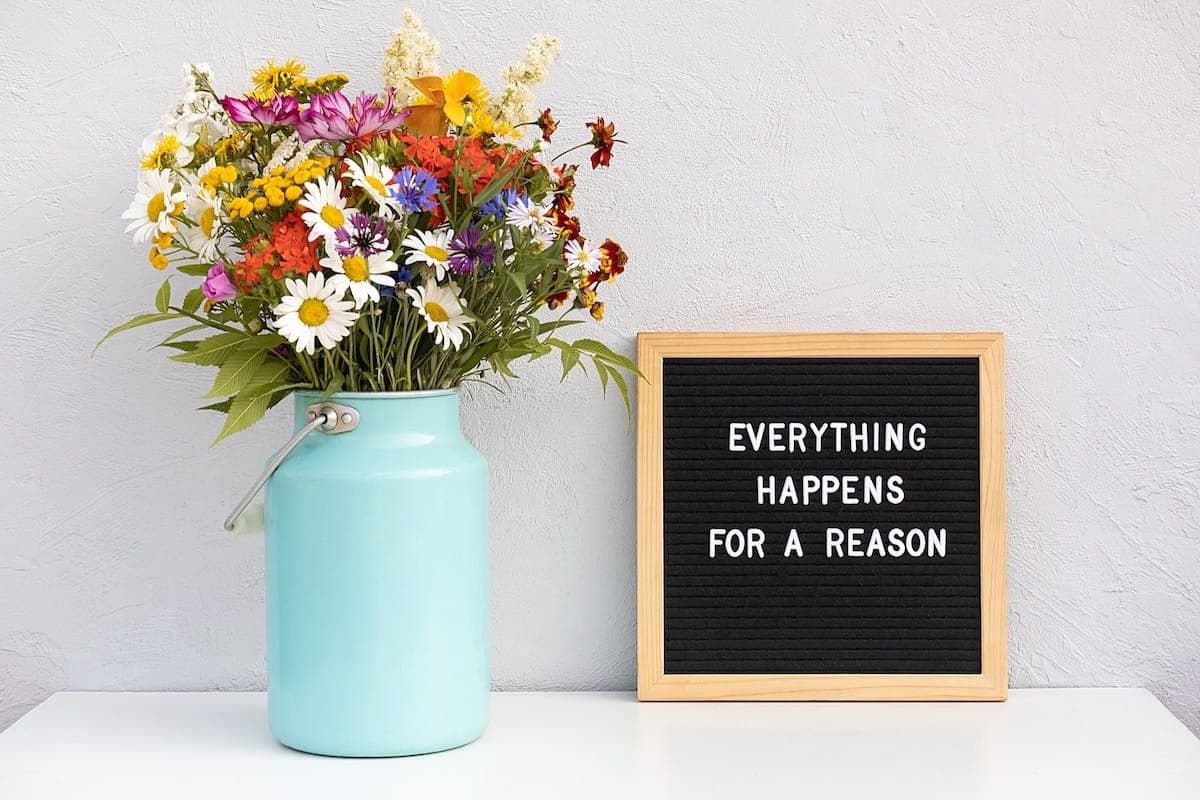
We’re surrounded by short, punchy wisdoms: Everything happens for a reason; what doesn’t kill you makes you stronger; happiness is a choice. They’re printed on tote bags and echoed in podcasts, promising certainty, comfort, and control, all things our brains are wired to crave, especially in uncertain times.
Psychologist Daniel Kahneman, author of Thinking, Fast and Slow, describes this as ‘cognitive ease’ – our preference for ideas that are simple and familiar. When something feels easy to process, our minds interpret it as true. Simply add an aesthetic font and a sunrise background, and it’s practically gospel.
According to a 2022 paper, published in Nature Reviews Psychology, repetition only strengthens that illusion. The more often we encounter a message, the more believable it becomes, even when it oversimplifies or contradicts our lived experience. In other words, we don’t just like one-liners because they sound wise; we like them because they make our brains relax.
When good advice goes wrong
The problem isn’t that these one-liners are false; it’s that they’re incomplete. What makes them soothing in one context can make them harmful in another. Take ‘everything happens for a reason’ as an example. For someone reflecting back on a past experience, it can be grounding. But say it to someone newly bereaved, or grappling with injustice, and it can feel cruel – as if pain is purposeful, or even worse, deserved.
Or ‘what doesn’t kill you makes you stronger’. It’s an anthem of resilience. But it also implies that strength is the only acceptable outcome of suffering, and if you’re struggling, you’re somehow failing the test.
Then there’s ‘holding onto anger only hurts you’. In the long term, this might be true, but often, anger has valuable information to offer about where a boundary has been crossed or when something matters deeply to us. Dismissing it can block us from understanding what that anger is trying to protect.
And perhaps the most seductive of all, ‘happiness is a choice’, which promises we can think our way into joy. But for anyone living with depression, grief, or trauma, it can feel a lot like self-blame.
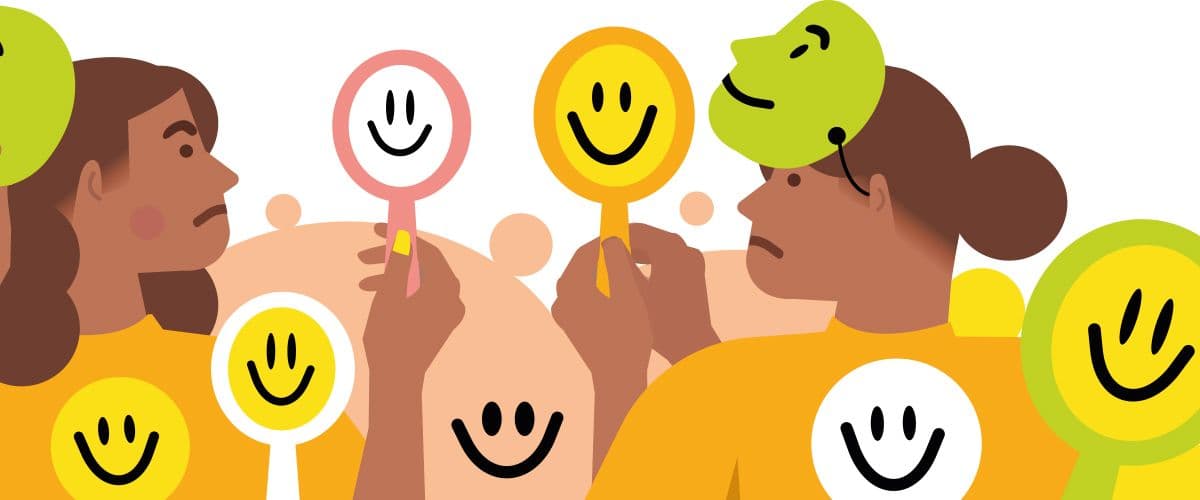
The same line can be empowering for one person and shaming for another, depending entirely on timing and context. The difference lies not in the words themselves, but in whether they meet us where we truly are.
Why do we reach for them?
When we use these phrases (especially in moments of someone else’s pain), it’s normally well-intentioned. Sitting with someone’s raw emotions can feel unbearable, so offering a one-liner gives us that quick hit of relief. Only it’s sometimes an escape route from our own discomfort, uncertainty, and the messiness of being human.
Learning to tell the difference
So how can we know when advice is helpful and when it might do harm? A few simple questions can help us discern what fits:
- Does this phrase honour my current reality?
Does it acknowledge where I truly am, or does it ask me to skip ahead to where I think I ‘should’ be? - Is it opening or closing the conversation?
Does it invite curiosity and connection, or does it shut the door on it? - Who does it serve?
Is it offered for the comfort of the listener, or the reassurance of the speaker? - Does it create space, or fill it?
Sometimes the kindest response isn’t a statement at all, it’s human presence.
When offering comfort, try phrases that create expansion rather than contract:
- Instead of ‘Everything happens for a reason’, try, ‘I don’t know why this happened, but I’m here with you.’
- Instead of ‘What doesn’t kill you makes you stronger’, try, ‘This sounds incredibly hard, what’s helping you get through?’
- Instead of ‘Holding onto anger only hurts you’, try, ‘Your anger makes sense. What’s it trying to tell you?’
- Instead of ‘Happiness is a choice’, try, ‘It’s OK not to feel happy right now. You don’t have to force it.’
Making peace with complexity
Maybe the real antidote to the harm of one-liners isn’t to reject them entirely, but to hold them lightly. To let them be what they are – small containers of partial truth – and to recognise when we’ve outgrown them.
Sometimes, we need simplicity. Other times, we need space. But we always need non-judgement from ourselves and others. Because healing isn’t linear. Growth isn’t tidy. And confidence doesn’t come from never needing anyone; it comes from knowing when you do.
So the next time a quote flashes across your feed promising clarity, try pausing before you internalise it and ask yourself: Does this meet me where I am, or where I wish I were? If it feels too small, don’t contort yourself into it; let it go. It’s not for you today.



Find a professional today
Try our guided search tool, we can connect you with over 20,000 professionals.