Why do we love ghost stories, and what does it reveal about us?
updated on Oct 28, 2026
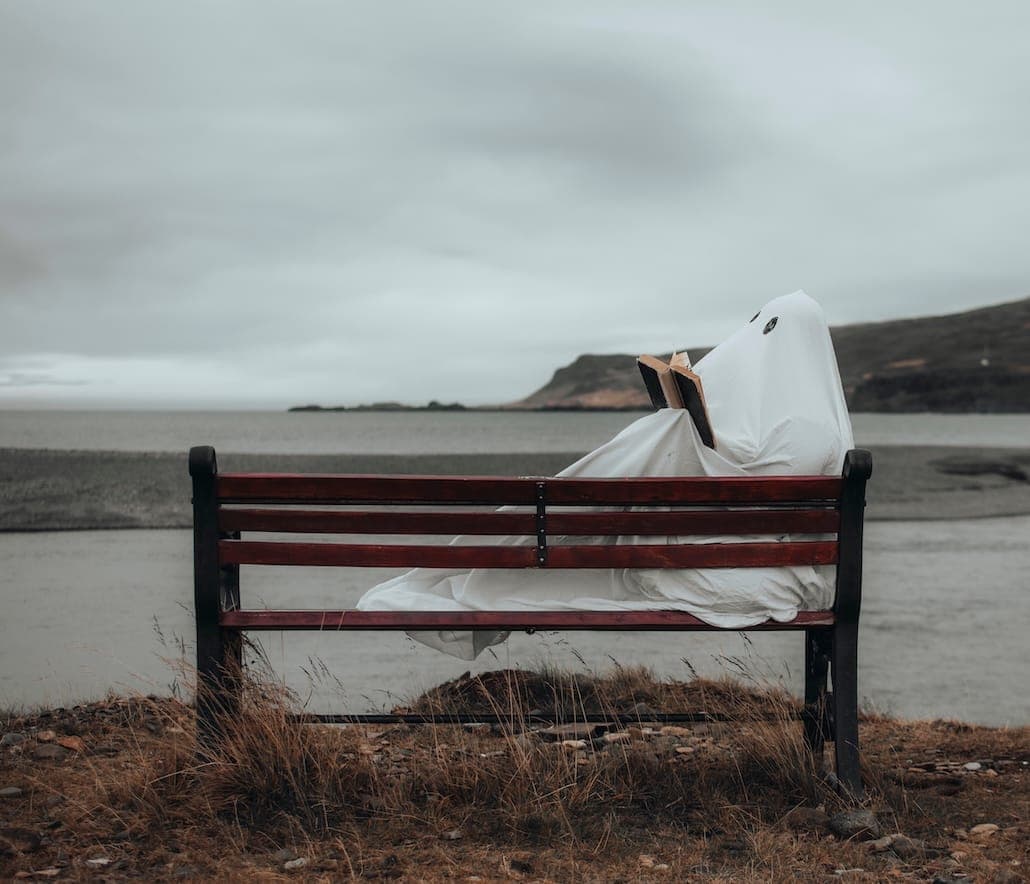
Writer Ellie House explores our fascination with the things that go bump in the night...
The faint scent of rose petals, a sudden drop in temperature, the creeping dread that inches across goose-pimpled skin, and the realisation that you’re not alone... For the dedicated guides working at Fyvie Castle, Aberdeenshire, this means one thing: Lilias Drummond has returned.
Although 17-year-old Euan Leonard is yet to experience her presence, by this point in the story, his audience is completely enthralled. Regardless of age or nationality, the tragic tale of a wronged wife fascinates the thousands of people who visit Fyvie Castle each year. It is no surprise that the 800-year-old baronial fortress comes with many a ghost story.
Echoes of all that once was linger amidst the armour and grand oil paintings, indicative of a rich past which refuses to fade away.
Euan, who became a guide at the castle last year, believes it’s the gruesome story of Lilias’s fate which helps bring Fyvie to life. Her demise at the hands of her husband, Alexander Seton, has been met with shudders from tourists as they stand in the lonely room where Lilias is said to have died. Whether you’re a firm cynic or committed to things that go bump in the night, the gripping power of a good ghost story can never be underestimated.
“People always ask about the ghosts of Fyvie; it is these tales which stay with people long after they have left,” says Euan. “I really enjoy telling ghost stories; the key is to build up the suspense.” Beneath the drama and intrigue is a tale which reveals the suffocating grip of the patriarchy, as Lilias was locked away because she did not ‘produce’ a male heir. She was imprisoned in what is now known as the ‘murder room’ at the top of the spiral staircase, where many people report feeling a sudden wave of sadness.
“Alexander Seton went on to remarry in the hope he would have a son,” recounts Euan. “On his wedding night with his 16-year-old bride, there was a moaning noise outside the window which kept the newlyweds awake all night. As morning dawned, the name of Lilias Drummond was found scratched into the stone windowsill directly outside the marital bedchamber. It can still be seen today.”
Historical facts are sometimes forgotten, but the story of Lilias is retold in multiple languages. She also inspires the sharing of other encounters, a dark yet lovely kind of comradeship among strangers. There’s a reason why we’re drawn to these stories. According to research by psychologist Coltan Scrivner, morbid curiosity is a normal psychological trait. The success of horror movies and literature alone suggests that it’s human nature to be curious about topics typically described as unpleasant, including death.

Dr David S Smith makes no secret of his love for both ghost and horror stories, and even runs a horror movie club at Robert Gordon University, Aberdeen – where he lectures in psychology. He believes ghost stories enable us to explore some of life’s big questions, yet ultimately offer a comforting safety net as the final chapter comes to a close.
“Fear does not feel pleasant, but it is a very useful emotion from an evolutionary point of view,” says David. “Without fear, our ancestors would not have lived very long. It enabled them to work out what to avoid. Ghost stories offer a different kind of fear, a safe fear. They often explore some of the worst things that could possibly happen to us, but we know we can always close the book.”
The idea of ghosts can even offer us comfort, hinting that death might merely be a different kind of beginning. From the classic love story that unfolds in Ghost to the warning spirits in A Christmas Carol – ghosts provide a vehicle for believing in an afterlife. “People have believed in ghosts since the beginning of time, perhaps because ghosts allow us to address the greatest uncertainty in life,” says David. “What happens to us after we’ve gone?” Although there are marked differences between ghost stories and horror, the themes they explore have forged a community which finally feels seen. “So many of these tales offer frank depictions of grief; ghosts often reveal regret and accountability,” says David. “Ghost stories are inherently a moralistic subgenre – this belief that how we live plays a part in what form the afterlife will take.”
Those who attend David’s horror movie club may be more psychologically resilient in comparison to their squeamish counterparts, at least according to a research paper. A study published in Personality and Individual Differences found that horror film fans had greater resilience during the Covid-19 pandemic, demonstrating that “exposure to frightening fictions allows audiences to practice effective coping strategies that can be beneficial in real-world situations”. In short, a good scare can come in handy when reality hits. David, however, isn’t convinced: “It could be argued that people with greater resilience for these things are already drawn towards horror rather than it changing anything.”
Sunday Times bestselling author Catherine Cooper was inspired to write her first ghost story, The Lake, after listening to a popular podcast which investigates paranormal activity. Uncanny is hosted by journalist Danny Robins, with first-hand experiences up for dissection. For Catherine, who is based in France, a ghost story can hinge on belief versus reasonable explanation. “The Lake is set around a ghost-hunting weekend at a castle in Scotland, which opens up to the public as a way to raise funds for its upkeep,” says Catherine. “The sharing of ghost stories is universal, and regardless of whether you believe – you can still have a fun conversation.”
An encounter with Sir Humphry Wakefield of Chillingham Castle in Northumberland also stayed with Catherine. “It was years ago when I worked on The Big Breakfast, and Sir Humphry’s love of the castle and its ghost stories really left an impression,” she recalls. “Ghost tours still happen at Chillingham today, and while I actually lean more towards the side of not believing, I do think certain places have an atmosphere. Ghost stories allow us to scare ourselves, but deep down we know we are safe.”
According to a study in Psychological Science, which followed 110 people through a haunted-house attraction, fear and enjoyment can coexist. The researchers found a ‘sweet spot’ of fear, where enjoyment appeared to peak when the dynamics were ‘just right’. Recreational horror can give us a relatively risk-free opportunity to play with fear, perhaps helping to explain the enduring appeal of experiences such as ghost tours.
The telling of ghost stories connects us not only to our history but to each other. Whether it be a scary movie you simply cannot look away from, a book that makes your breath catch in your throat, or a ghost tour that sets your pulse racing, these controlled encounters allow us to approach fear from a position of safety. But beyond the jump scares is something deeper: a yearning to know that we are never truly alone. Perhaps our fascination with ghosts tells us less about the dead and more about the living.



Find a professional today
Try our guided search tool, we can connect you with over 20,000 professionals.