The collective offering support to the widowed

updated on Sep 27, 2026
The casseroles stop arriving, the messages become less frequent, and life carries on around you. The Widowed Collective exists for that chapter of grief that often gets missed, helping people rebuild alongside others who are walking the same path
When someone loses a partner, support often arrives shortly after. Home-cooked meals are served up by friends. Flowers arrive daily. The phone rings non-stop. But as the weeks accumulate, life eventually returns to normal for everyone but the person who has been widowed. The support that once felt endless does, unfortunately, come to an end.
The Widowed Collective is made by and for people who have experienced just that. Founded by Manchester-based friends Nicky Wake and Natalie Bolton, the free, UK-wide peer support community offers online support meetings, in-person events, practical guidance and, perhaps most importantly, connection with people who understand. Led entirely by widowed people with lived experience, the organisation exists to make sure nobody has to face widowhood all alone.
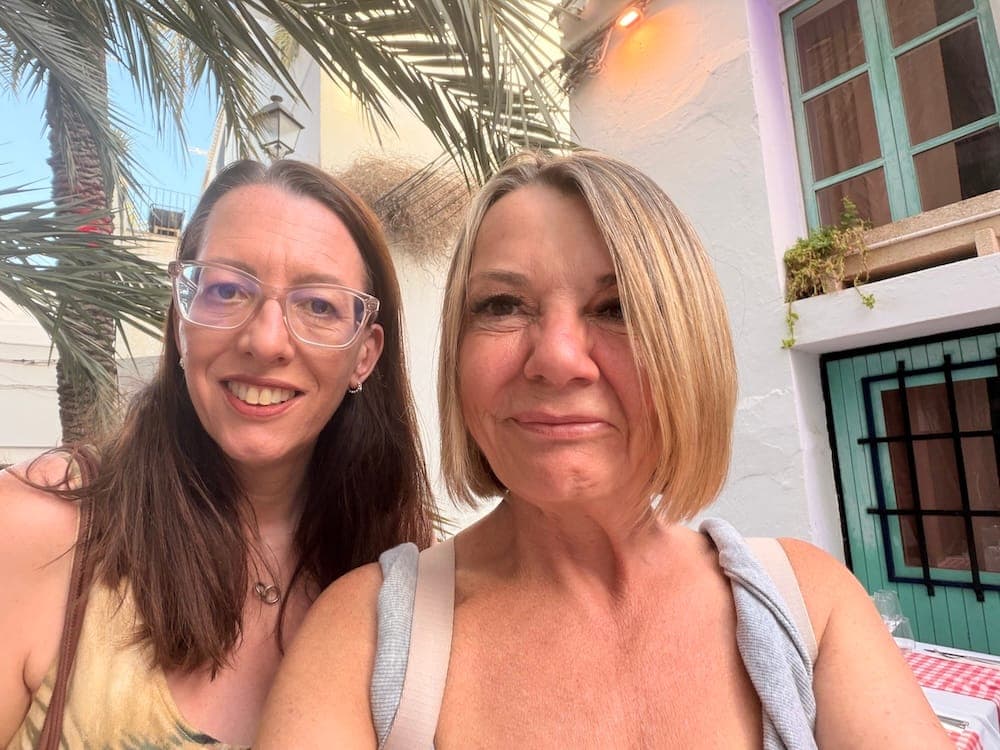
For Nicky, the seeds of the community were planted many years ago: “The Widowed Collective really began long before the organisation itself existed,” she says. “It began during the years after my husband Andy became ill, and then later after he died.”
When Andy died in 2020, Nicky found that much of the support focused on the immediate practicalities of bereavement. What she couldn’t find was a place for the months and years that followed. Over time, she met other widows and widowers who felt exactly the same.
One of those people was Natalie, whose husband Jonathan died suddenly from a cardiac arrest in 2021, leaving her raising their teenage daughters while trying to process grief and trauma.
“I remember feeling as though everyone around me had eventually gone back to their own lives while mine had permanently changed,” she says. “People were kind, but very few truly understood what widowhood felt like.”
The Widowed Collective grew from their shared understanding and a need to create something that neither of them had been able to find themselves.
“When I met Nicky, there was an immediate understanding that required no explanation,” says Natalie. “We could talk honestly about grief, parenting, loneliness, practical worries, and even moments of laughter without judgement.”
Together, they realised their experiences weren’t unique. “What struck me most was how invisible widowhood can become,” says Nicky. “People naturally stop asking how you are because they assume time heals everything, but in reality, many of the hardest moments come months or years later.”
Studies show that the highest risk and severity of depressive symptoms happen within the first year following the loss of a partner. But a 2019 systematic review, published in Social Psychiatry and Psychiatric Epidemiology, found that 15–20% of widowed adults experience chronic, enduring depression or complicated grief lasting five years or longer. And while professional support such as therapy and medication may be an essential pillar of healing for many, it’s the community aspect that makes The Widowed Collective especially transformative.
“We don’t position ourselves as experts, and we don’t tell people how they should grieve or how long things should take,” says Nicky. “Instead, we create spaces where people can share experiences, ask difficult questions, and connect with others who understand.”
Membership to the collective is free, and comes with a range of ways to access peer support. From online meetings and WhatsApp chats to real-life conversations taking place in coffee shops and community spaces, there is room to chat.
Some members have lost partners only days before; others have been living with loss for years. Some are raising young children, while others are navigating retirement after decades of marriage.
“I often say that people arrive because they have lost somebody, but they stay because they find people who understand,” Natalie says. “There is room for sadness, anger, humour, frustration, and hope, and there is no expectation that anybody has to be OK.”
“People often arrive carrying a mixture of shock, exhaustion and fear,” says Nicky. “Over time, what we often see is people beginning to soften slightly, not necessarily because the grief disappears, but because they no longer have to hold it alone.”

The pair describe online meetings and in-person gatherings that are often much lighter than newcomers expect.
“I think [newcomers] would probably be surprised by the warmth in the room,” Nicky says. “People sometimes imagine widowed spaces as being very heavy or sombre, and of course there are emotional conversations, but there is also laughter, friendship, and a real sense of relief.”
Natalie agrees: “I think the first thing people often notice is that they can breathe,” she says. “Stepping into a space where everyone has their own version of loss can feel like a release.”
Some of the moments that stay with them aren’t dramatic at all. Nicky remembers one woman who joined an online meeting just a week after the passing of her husband.
“Nobody tried to fix her grief or offer easy answers,” she says. “Other members simply listened, shared their own experiences, and made space for her exactly as she was.”
For Natalie, it’s often the ordinary conversations that say the most. “I remember one online meeting where somebody said they had been talking to their partner out loud in the kitchen and then immediately apologised because they thought everyone would think it sounded strange. Almost instantly several other people said that they do that too.”
As the community continues to grow, both founders hope it also helps change wider conversations around grief. “I would like people to know that widowhood is not an event that ends with the funeral,” says Nicky. “For many people, the most difficult period begins once everyone else has returned to their own lives.”



Find a professional today
Try our guided search tool, we can connect you with over 20,000 professionals.