Sport isn’t just a playground for talent; for many neurodivergent girls, it can be a lifeline. I know, because it was mine…
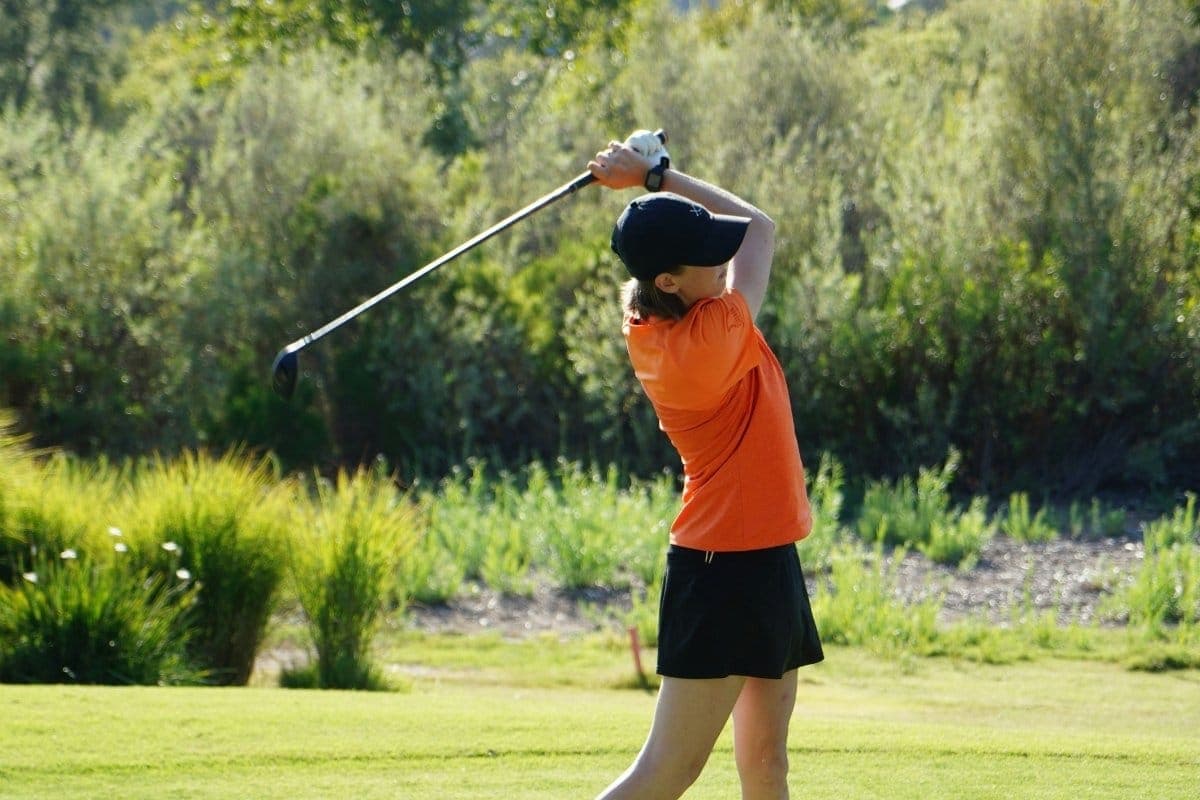
I’ve played golf for as long as I can remember. My dad would drop me at the course and, hours later, I’d still be there, chipping until the light disappeared. I didn’t realise it at the time, but that was the one place in the world my mind stopped spinning.
Back then, nobody talked about ADHD in girls, especially not the quiet, bookish ones like me. I was a good student. But I was also a straight-A overthinker, and I’d lose everything, turn up late, and leave a trail of half-finished projects in my wake. But because I was doing well academically, no one ever considered whether I could have ADHD.
When I finally told a doctor I thought something was wrong, or at least different, he gave a small, knowing smile and said, “If you can get a master’s degree and hold down a job, how bad can it be?”
Pretty bad, as it turned out. By my mid-twenties, I was exhausted with the constant mental noise; the need to do, fix, and perfect. It became unbearable and, eventually, I burned out.
It took years of false starts and misdiagnoses before the possibility of ADHD was even mentioned. And when it was, something clicked into place that explained almost everything: why I worked in sprints, why I couldn’t slow down, why the world so often felt like it was moving too fast and too slow all at once.
It also explained why, against all odds, I’d fallen in love with one of the slowest games on earth. While other hobbies came and went (as my graveyard of dead houseplants can attest), golf stayed. I used to think that was discipline. Now, I know it was brain chemistry.
Previously, research has found a link between low dopamine levels and ADHD, and while low dopamine alone may not be a direct cause, it contributes significantly to symptoms. Golf gives me the perfect mix of routine and dopamine-boosting novelty. I may play the same course, but never the same shot. It rewards focus, which feeds the dopamine loop and offers a rhythm my brain recognises instantly. I get the steady familiarity and the kind of mental stimulation that brains like mine naturally crave.
Hyperfocus is common for people with ADHD, but often, we can find ourselves overly focused on the wrong things. Golf gives me somewhere to pour that focus, somewhere all-consuming that still feels safe. Even when the rest of my world feels chaotic, on the golf course, I always know exactly what to do next. When I’m standing on a tee with the wind cutting across the fairway, I’m not overthinking or catastrophising. For once, I’m not up in my head, but exactly where my feet are firmly planted.
Professional golf player Charley Hull has spoken about being diagnosed with ADHD, and how understanding it has helped her manage her energy and focus on the course. Hearing her talk about it was one of the first times I’d seen someone in sport describe a mind that worked a bit like mine, and it was inspiring. We don’t talk enough about how powerful that openness can be, especially for girls who are neurodivergent but undiagnosed. A recent study in European Psychiatry found that, on average, women are diagnosed five years later than men, and often, it comes after years of anxiety, depression, and burnout. It’s a reminder that what looks like coping can sometimes just be survival in a society that is set up to function for brains that aren’t made quite like ours.
Other sports can offer the same kind of focus and calm: the rhythm of swimming lengths, the choreography of dance, the precision of gymnastics. Research from 2019, published in Frontiers in Psychology, notes that even just a single session of physical exercise has immediate improvements in executive functioning, reaction time, and other ADHD symptoms. While a more recent study from 2025 built on this to observe a 12-week clinical trial combining aerobic, strength, and flexibility training, which led to clinically meaningful reductions in ADHD symptoms.
But the power lies not just in movement itself, but in the sense of belonging and self-expression it brings. You see it in openly neurodivergent stars like footballer Lucy Bronze and gymnast Simone Biles, athletes whose intensity and creativity make them extraordinary. And we’re seeing more role models emerging, too, like Manchester United’s Safia Middleton-Patel, who proudly advocates for the autistic community. Their stories matter because they show what’s possible when difference is understood instead of hidden.
After an incredible few years for women’s sport, it’s vital that everyone is included in that momentum. A 2023 study by Women in Sport and Breaking Barriers found that 67% of disabled teenage girls say they want to be more active, but many still face barriers.
As investment surges into women’s sport, we must also recognise its potential to support mental health and create environments where all girls feel they belong. For me, golf was a lifeline. It gave me space to fail safely, to channel intensity, and to focus deeply without shame.
Sometimes that environment is a stage or a studio. Sometimes, it’s a pitch, a pool, or a quiet patch of green where you learn to begin again after every missed shot. Golf didn’t cure my ADHD, and I wouldn’t want it to. But it always met me where I needed it.



Find a professional today
Try our guided search tool, we can connect you with over 20,000 professionals.