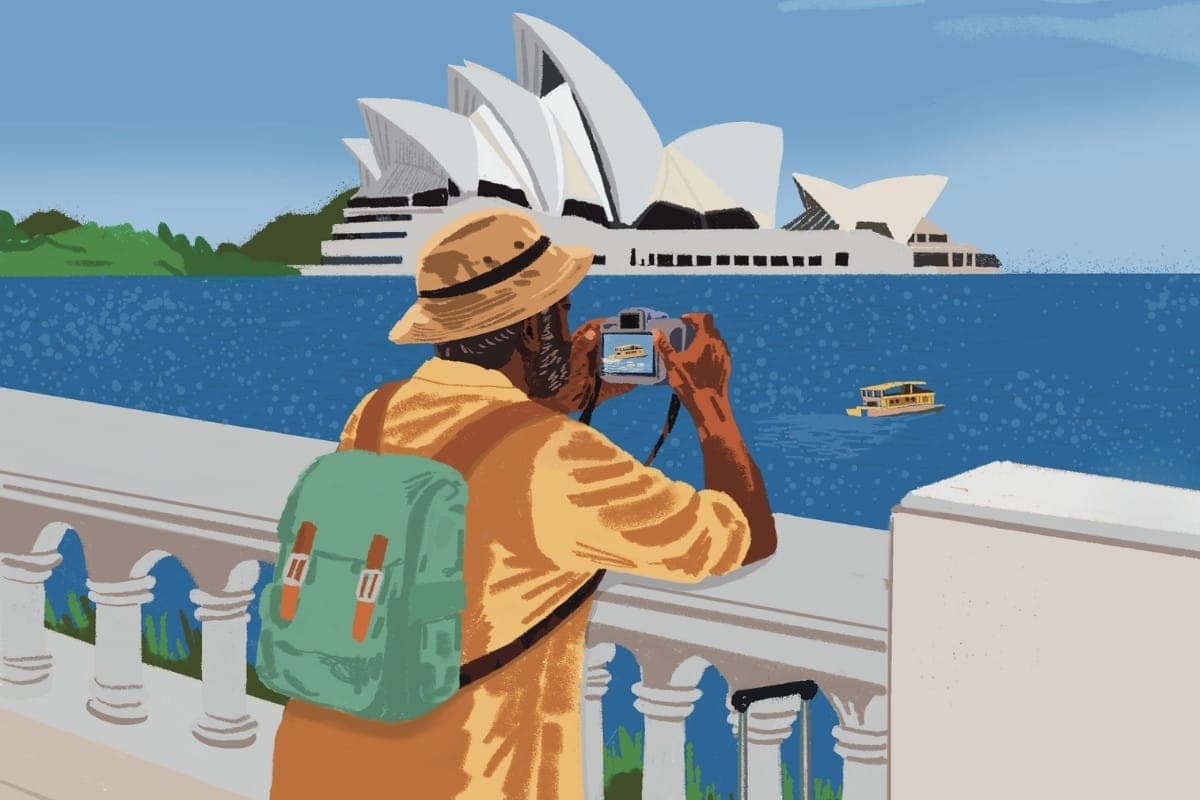
An exploration of both the meaning of, and how to cultivate, courage in pursuit of our dreams, and what it takes to travel solo at 60
I have always felt a deep pull to travel solo, to let my adventurous spirit lead the way without answering to anyone else. That longing lingered for several years, but, as often happens, life got in the way. Family, work, responsibilities – they quietened the voice until it became barely a whisper.
Then, I turned 60, and the voice grew louder; but I worried that it was too late to explore far-off horizons, that I had missed my chance. Around the same time, I started working with Jack, a 30-year-old counselling client, who was full of the same restless energy. He wanted to quit his job, leave his marriage, and see the world. Talking with him, week after week, felt like speaking to a mirror. It forced me to confront my fear of looking silly, being judged, and temporarily leaving the safety of my comfortable life.
Research shows there is a growing movement of folk, like me, who want to travel solo. According to Saga’s 2023–24 Travel Trends, which surveyed more than 2,800 of its customers, 20% of people over 50 plan to travel solo, and 91% have embarked on solo trips before. It also reports that independence, a ‘seize the moment’ mindset, and an unwillingness to wait for others are motivating mature travellers to see the world on their own terms.
It wasn’t until Jack eventually announced that he was ready to build a life that was a better fit for him, that I really felt inspired to take the leap, and plan a once-in-a-lifetime six-week solo trip along Australia’s western coast.
The real test came when my finger hovered over the button to officially book my flights and accommodation. Part of me secretly hoped the payment might fail, giving me time to reconsider. But, in the moment, I recognised that this combination of excitement and terror is something I’ve seen many times over with my clients, especially older ones, and it’s normal.
As we age, routines and familiar patterns feel safe. But, in my work as a counsellor, I’ve seen too many people cling to safety long after it stops serving them. As the payment went through, and my booking was accepted, I knew deep down that stepping into uncertainty, at any age, has the potential to open the door to growth, confidence, and joy. It’s not easy, but it gets more rewarding with every step.
What made it slightly easier for me to heed the call to adventure was the encouragement from my family. Some cheered when they heard the news, while others were surprised or sceptical. My husband, always my steady support, hugged me and said: “You’ll regret it if you don’t go.”
My adult children – who have backpacked solo – were thrilled with my news, and called me courageous. Their words warmed me, but also made me reflect on how I had let life get in the way of my own boldness; how I had waited so long to make my dream a reality. But the truth is that many of us are conditioned to feel ‘too old’ to do the things we love. My question is: too old for what? For feeling alive, curious, and open to possibility? Not only does courage not fade with age, but it can grow richer as a result of our life experience.
Of course, it’s natural for fear to hold us back, but counselling others has shown me that opening up about these fears is often the first step to major breakthroughs. One study, published in the journal Molecular Psychiatry in 2021, shows us that when you decide to face a fear, your brain releases the feel-good chemical dopamine. Plus, when your courage results in a positive outcome, even more dopamine is released, giving you the motivational boost to keep bravely trying new things.
Many of my clients worry deeply about what others will think of them if they do something unexpected, such as travelling alone. Cognitive behavioural therapy (CBT) offers a practical way to work through these worries, and builds resilience. As I often tell clients, nothing grows in the comfort zone except, maybe, regret.
With that said, choosing adventure as you age isn’t always about travelling across the world. Sometimes it’s wearing a brightly coloured outfit, trying new foods, or rocking up to the dance class you have always watched from afar. Courage is less about conquering fear and more about trusting yourself amid whatever uncertainty lies ahead.
As I write this from the airport, about to board the flight to Australia, I know that fortune always favours the brave. It may not feel natural – or easy – to overcome the fear of travelling solo, but better to live boldly than to let those dreams fade without giving it a go
Examine the story you’re telling yourself about why your age is an obstacle. CBT can help here, as it offers specific techniques to target unhelpful thoughts, feelings, and behaviours.
Expose yourself gradually to the physical experience of courage to help build your capacity for it. Try doing something ‘brave’ today, like gently setting a boundary, or signing up for a hobby you’ve always wanted to try.
Reframe risk: what’s the real danger? What’s the cost of not trying, and are you willing to pay it? Studies on regret have found that inaction hurts more in the long-term.
List what matters most to you at this stage in your life. Seeing your personal values written in black and white can empower you to make choices that feel right for you, even when others don’t understand.
Debbie Crew is a counsellor and clinical supervisor. Find her profile on the Counselling Directory.


Find a professional today
Try our guided search tool, we can connect you with over 20,000 professionals.