Defying societal expectations could be your next big breakthrough

updated on Mar 30, 2026
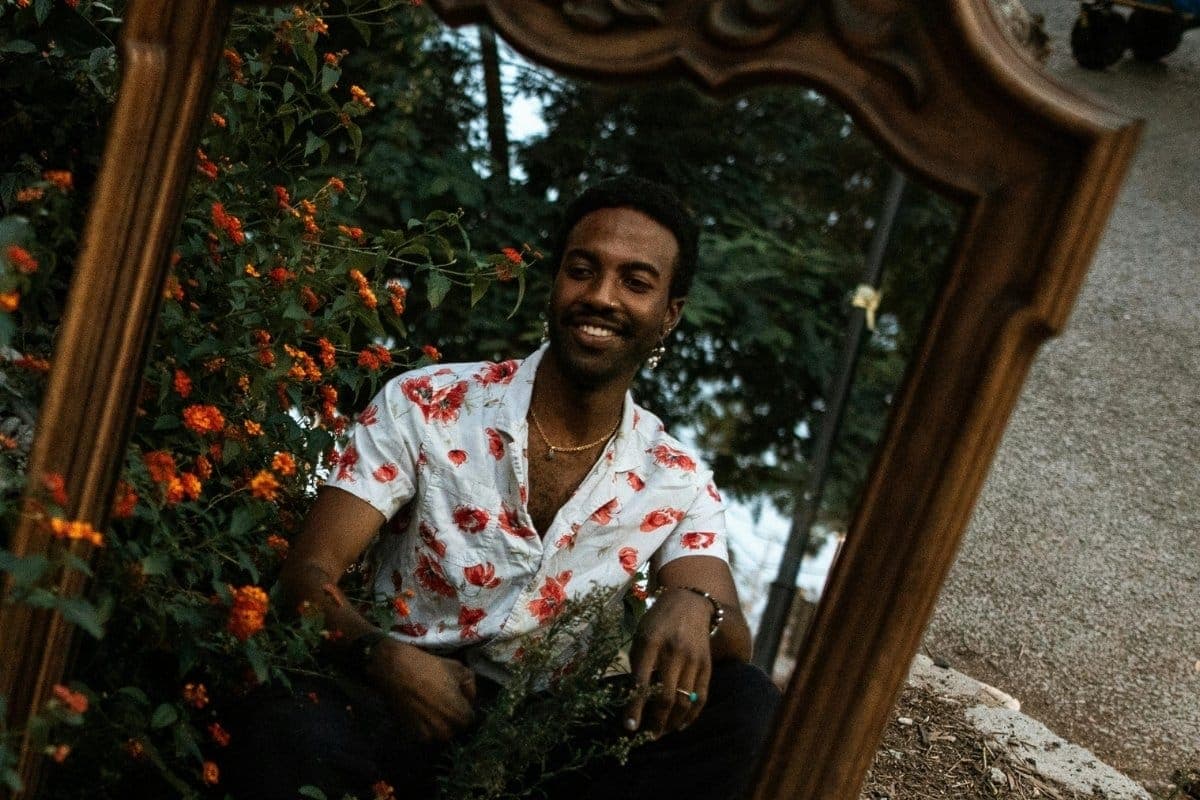
Why pushing back against societal norms can trigger fear, and how to reframe the challenge to work in your favour…
'Feel the fear and do it anyway’ is a slogan that’s often offered as an instant confidence booster. It’s a phrase that, when followed consistently, has the potential to help us break through limiting beliefs, and do things that we never thought we’d be capable of. But, when the fear we’re facing is social judgement, the advice might feel like it falls a little short.
Motivational speakers may encourage us to give up caring what other people think to find satisfaction in life, but, in my experience, choosing to defy societal norms takes more than positive affirmations alone.
As a late-bloomer, I only discovered my sexual identity at 35 years old, so I know what it feels like to openly be yourself in a world that wants you to fit a ‘mould’. Research, including a 2020 study in SSM Population Health, shows that humans have a deep-rooted need to belong – with psychologists describing belonging as one of our core motivations, just after safety and physiological needs – which may explain why going against ‘norms’ feels so threatening.
The good news is that if you are feeling the urge to push back against external expectations, but are scared to make a move, you’re not necessarily doing it wrong. In fact, this discomfort is often a sign that you’re braver than you think.
Fear of judgement isn’t a flaw
There are an infinite number of ways that we can push back against what society expects of us, and how we respond to the urge to do this can be influenced by multiple factors. For those who are marginalised, breaking the mould can carry greater social, economic, or professional consequences, making fear of judgement more than just a feeling.
As an example, someone may be sober curious, but feels unable to limit their alcohol consumption in practice, because drinking culture is deeply embedded in their social circle. There could also be situations where a person from an underrepresented background might avoid putting themselves out there and seeking a promotion, because they fear discrimination or bias.
These kinds of fears are valid, and not necessarily a sign that either person is failing in any way. As humans, we crave social acceptance to the point where we will abandon our own needs and desires in order to meet that craving, and identifying that pattern can help to shift your perspective.
“When people stop seeing fear of societal judgement as something to fix, there’s often a relaxation, and a lightness – a putting down of burdens, or dropping of guard,” says identity coach Annabel Smith.
Whether you’re worried about pursuing a more ‘unusual’ passion, following a less conventional life path, or feel nervous about wearing an outfit that challenges gender norms, these fears can act as clues that highlight where your life may no longer fit the mould you’ve been trying to squeeze into.
Releasing predefined roles
With that said, instead of diving right into fears around societal isolation, Annabel focuses on the individual at the heart of all this. “All my client work begins with work on identity, then values, and purpose,” she explains. “Until these are explored, updated, and aligned, transformative change won’t happen.”
It’s this investigation into your personal preferences that is so important, because it gives you permission to step away from and (perhaps for the first time) notice the roles you’re performing that no longer feel right.
From experience, I can say that this part of the process can feel a little bit like scrambling in the dark. After a lifetime of people-pleasing and following the path set out for me, I was confused about what choices were truly mine, and which were made in order to fit in with those around me.
But I implore you to stick with it, and get support from a coach or therapist if you can, because as Annabel says: “A strong and positive sense of identity, supported by a clear purpose and set of personal values”, is key to making the transition into a life that feels more like you.
Listen to your gut
This is a concept that can be tricky to pin down, but still a skill that can be learned and will help guide you when the path is unclear. “I help [clients] to turn down the volume on the negative, saboteur voices we all have,” says Annabel, “and turn up the volume of the positive, wise voices – and feed them with evidence.”
Finding a way to hone your intuition on a daily basis can be really helpful here. I like to use tarot cards – without the guidebook – as a way to ‘tap in’ to my inner voice. Deciphering the meaning of the images through my intuition alone has been a way of accepting my perception as valid, and my choice as ‘right for me’. For you, meditation might serve as a helpful check in, or walking mindfully in nature.
Ultimately, it’s not about fighting off the fears that come from being a little different, but about nurturing your self-confidence in a way that means you’re less likely to be swayed off your path just because it feels like the more comfortable option.
“While societal judgement can be a significant factor, it’s often the internalisation of that judgement that is most restrictive and damaging,” explains Annabel. “Once [people] believe they don’t need fixing – because they’re not broken, just human – everything becomes lighter.”
In this way, the resistance you feel to taking the road less travelled becomes a tool for self-understanding, instead of a constant battle against yourself.
The honest truth about authenticity
So many of today’s self-help books are built on the idea that being your true self is easy and fun. But if defining yourself outside of social norms involves going against societal expectations, the research tells us that you’re likely to elicit negative responses, be perceived unfavourably, or experience negative emotions, scolding, gossip, and even punishment, as noted in a 2021 paper published in PLOS.
Yes, choosing authenticity can come with some genuinely heartbreaking losses. The more that I’ve gravitated towards the things that feel right for me – quitting alcohol, living childfree by choice, getting divorced – the smaller my social circle has become, and the more often I notice that my life doesn’t match up with the people around me.
But the upside is that, although it can throw some relationships into question, the relationship I have with myself is becoming unshakeable. As Annabel puts it: “‘Life is difficult and complicated, but the monsters – particularly shame – gradually dissolve.”
Opting to break the mould means I experience less internal friction, because I rarely find myself going ‘along with the crowd’ when my gut is telling me otherwise. How I use my energy is guided by my own needs, meaning that I am learning to let go of perceived obligations more easily.
When you find yourself breaking away from the mould, at first it can feel destabilising. But over time, with patience and practice, choosing your own path begins to feel less like fear, and more like peace – not because life becomes easier, but because you stop fighting the truth of who you are.