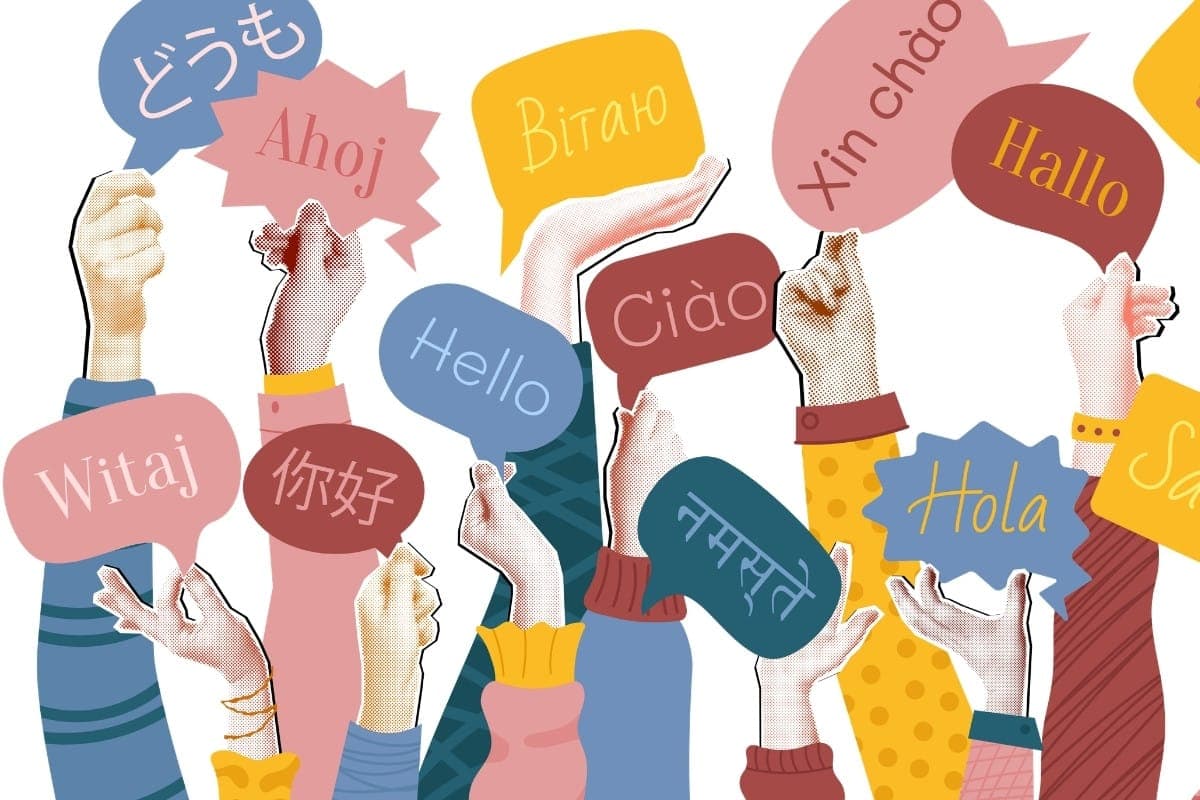
The secret to keeping your brain active and energised could be on the tip of your tongue... With new research highlighting how learning languages can reduce brain ageing, we’re sharing effective and fun ways you can embrace lifelong learning, and cherish connecting with other cultures
If you love to travel, then you’ve likely spent some time learning different languages along the way, too. But asking a French local where the beach is (“Où est la plage?”) or a Spanish shop owner the price of a postcard (“Cuánto cuesta?”) can do more than make a holiday run smoothly. In fact, according to a new study, speaking multiple languages could help slow brain ageing, and reduce the risk of cognitive decline later in life.
The 2025 research, published in the journal Nature, showed that multilingual adults are around half as likely to show signs of accelerated biological ageing, when compared with those who spoke just one language.
Past research has suggested that speaking multiple languages can improve things like memory and attention, which boosts brain health as we get older. But many of the studies featured relatively small sample sizes and used unreliable methodology – so it was hard to apply the findings reliably to the general population.
To address this gap, researchers analysed data from more than 80,000 healthy adults aged 51–90, living in 27 European countries, looking specifically at what’s known as a ‘biobehavioural age gap’ – the difference between a person’s chronological age and their predicted biological age. This predicted age takes into account a wide range of factors, such as physical health, lifestyle, education, and socioeconomic circumstances. The theory is that when this gap is larger, the person’s body and brain are ageing faster than expected, whereas a smaller gap may indicate healthier ageing.
When researchers compared this age gap, they found that people who spoke only one language were twice as likely to show signs of accelerated ageing, compared with those who spoke two or more languages. The exciting news is that even learning just one additional language appeared to offer protective benefits, and the effect grew stronger with every extra language spoken.
So, multilingualism could be a powerful way to maintain a healthy brain as we age. But with this knowledge, how can you try learning another language (or two) to boost your brain?
Master the basics before you go abroad
If you’re planning a trip, it can be tempting to rely on translation apps, and other people speaking English. But, challenging yourself to get your head around the basics before you arrive can not only boost your confidence when finding your local amenities, but, also, give you those brain-boosting benefits. Start with everyday phrases, like saying hello and goodbye, polite expressions, directions, and food-related words. These little linguistic nuggets do more than just train your brain, they also boost self-esteem, and offer a chance to socialise with people, as noted in Frontiers in Human Neuroscience.
Use learning apps to build a daily habit
Language-learning apps can be a surprisingly effective way to build momentum, especially if you’re short on time. Just a few minutes on an app, like Duolingo, can help reinforce vocabulary and sentence structure without feeling overwhelming, and can be done on your lunch break, before bed, or waiting for the bus. With most apps using repetition and gamification features, learning this way can be a good avenue to build the habit.
Try immersing yourself in the language
YouTube offers an endless supply of free, accessible language resources, from beginner lessons to immersive content. In addition to watching educational grammar videos, try watching vlogs, cooking videos, or travel content in your chosen language. Hearing real voices, accents, and rhythms (even if it’s playing in the background while you do other things) can train your ear in a way textbooks can’t. A 2019 paper, published in NeuroImage, found that this kind of passive learning can help with distinguishing between speech sounds that most adult learners have been known to struggle with.
Structured classes
If self-guided learning isn’t for you, evening classes can provide both structure and motivation to help you learn the lingo. Group learning offers the chance to practise speaking in a supportive environment, ask questions, and learn from others’ mistakes, as well as your own! It also puts language learning on your calendar as a regular commitment, rather than something that slips down the to-do list on busy days. Libraries, community centres, and further education providers are great places to look for classes.
Connect with the culture
Deepening your understanding of the culture around the language you’re learning can make the process more meaningful and memorable. Watching documentaries, reading novels or history books, or researching a specific city, or country, can help words come alive. Ready to practise your vocabulary? Host a dinner party or potluck with food from a country that speaks your target language. This can also act as a soft ‘deadline’ for learning a set of words and phrases to impress your guests!
Learn with another
Whether it’s a friend, partner, or colleague, having a regular back-and-forth with someone not only offers an opportunity to practise, but also adds accountability. You can quiz each other, share resources, or simply talk through what you’ve learned. Alternatively, if you want to practise with a native speaker, try out the Tandem app. It’s a free service that matches you with someone who will talk to you in your target language, in exchange for some conversation in English, or another language you speak.
So, whether you’re dreaming of ordering ravioli in Rome, haggling at markets in Marrakech, or simply impressing your friends at home, remember, every new word you learn is an investment in your future wellbeing. After all, when it comes to keeping your brain healthy, it’s never too late to find your voice in a new language.
It’s never too late to start. The study mentioned here focuses on adults aged 51–90, proving that learning a language can be effective well into later life.
You don’t need to be fluent in multiple languages to see the benefits. Research suggests that engaging with more than one language, even at a basic level, may be enough to stimulate the brain.
A few minutes a day can be more valuable than an hour once a week. Regular exposure keeps neural pathways active, and reduces the pressure to perfect every phrase.
It’s not supposed to be easy. Finding words, switching between languages, and making mistakes can feel like failing, but it's exactly this kind of mental effort that keeps the brain flexible.



Find a professional today
Try our guided search tool, we can connect you with over 20,000 professionals.