Are you self-silencing? Here's what happens when anger is silenced
updated on Feb 17, 2026
There are a myriad of reasons why rage goes unprocessed, but what are the consequences? Here, we’re exploring the hidden impact of suppressed emotion, particularly on women’s wellbeing
I’ve never made much room for anger in my life – perhaps you can relate. I characterised it as something negative; a human weakness that could only lead to hurt. I’d bite my lip when I felt frustration build. I’d boil internally, while smiling through gritted teeth. I’d mutter to myself crossly how no one cared. I felt denied, but my internal narrative said that suppressing anger was the better path.
As research evolves, however, we’re beginning to see a connection between the suppression of anger and physical sickness – and overwhelmingly so in women. In fact, when women suppressed their emotions, they appeared to be at greater risk of developing autoimmune disease, with a 2020 study in Cureus indicating that 80% of people with autoimmune conditions are women.
This begs the questions: what prevents women from being able to assert their aggression in a healthy way, and how can they begin to do this in order to support their wellbeing?
Why do women feel unable to express anger?
When we begin to understand where anger comes from, it can help us to normalise our experience of it. Psychodynamic therapist Laura Patterson says: “The best way of viewing our emotions is to look at the contained word ‘motion’, which indicates that our emotions are always moving us to do something.
“This is nature’s way of guiding us to properly process, and let go of, anything troublesome; so that we do not experience psychological or psychosomatic disturbance.”
Anger forms an integral part of our emotional experience. According to therapist, and host of ‘The Feminist Mom’ podcast, Erin Spahr: “Anger is, at its core, a response to a sense of injustice or a violation of boundaries.
“For women, this can stem from the unique burdens placed on us – often feeling overworked, unsupported, or unseen in our roles.”
In this sense, anger does not exist in a vacuum. “One must always remember that hurt and anger are two sides of the same coin,” says Laura, “and hurt that is not expressed and processed productively results in anger.”
So, where did this disconnect between feeling and expression come from? Laura believes women have denied themselves the right to anger because of cultural expectations: “Anger is most commonly associated with being a masculine emotion, which renders many women incapable of expressing it; societal and cultural pressures inform them it is not ‘appropriate’ to do so. Women have resultantly been forced to place their anger in the shadows.”
But just as anger isn’t ‘bad’ or ‘wrong’, it is not gender-based. “It is not that one sex is any angrier than the other,” explains somatic and vocal release coach Ani Djirdjirian. “It’s about society’s expectations. Both men and women need the freedom to express all of their emotions. When we deny anger, we deny ourselves the chance to heal, grow, and connect authentically.”
Suppression and sickness
While research in this area continues, a growing body of evidence suggests that suppressing emotions, including anger, may have significant physiological consequences. One study, published in JAMA, found that people with stress-related disorders, like post-traumatic stress disorder (PTSD), had a significantly higher risk of developing autoimmune disease. Notably, women are more likely to suffer from PTSD, at an estimated ratio of 2:1, according to the National Center for PTSD.
Research also suggests that women are at higher risk of suffering from a number of conditions, including chronic pain, insomnia, fibromyalgia, irritable bowel syndrome, and migraines. A 2021 study, in the Annals of Behavioral Medicine, revealed that women of colour who strongly agreed with statements like “I rarely express my anger” were 70% more likely to experience carotid atherosclerosis – a cardiovascular plaque that can lead to heart attack.
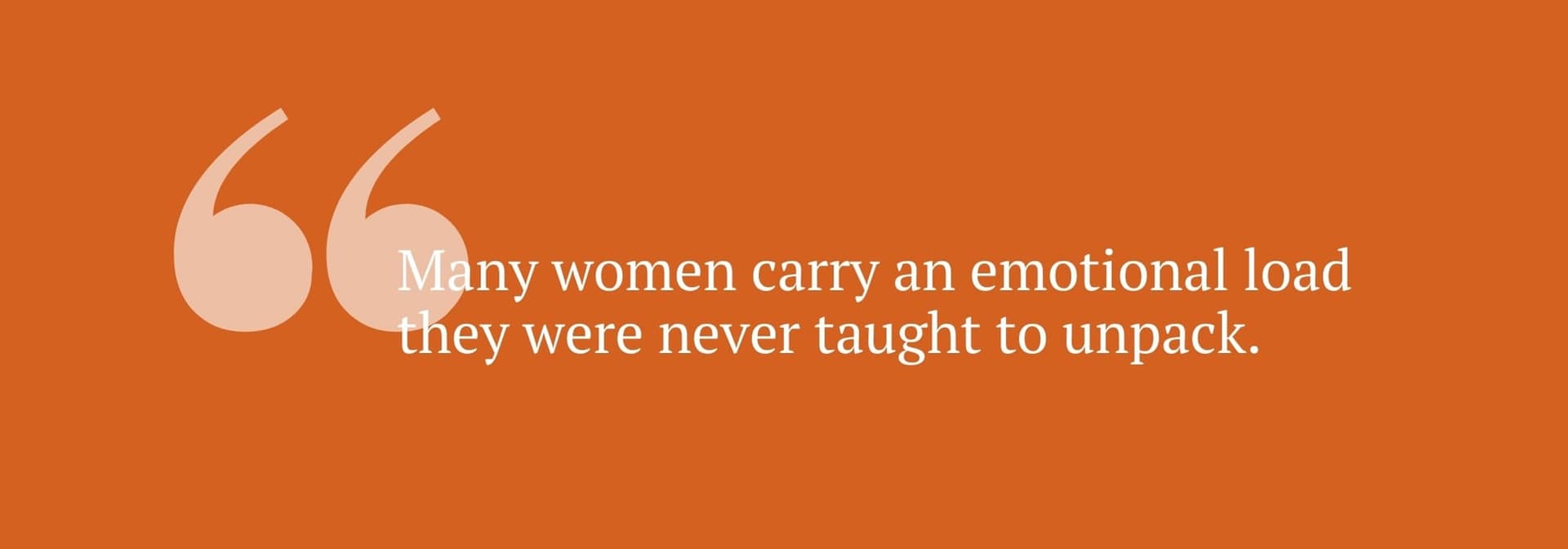
In correlation, self-silencing (suppressing your own thoughts, feelings, or needs to avoid conflict) has been found to be a contributor to a number of physical and mental health conditions. Dr Ketan Parmar, a senior psychiatrist with more than 30 years of clinical experience, says: “Many of the women I treat carry an emotional load they were never taught to unpack. It slowly builds expectations, unvoiced frustrations, caregiving fatigue, and it doesn’t explode; it internalises. Over time, the immune system starts responding as if it’s under constant threat.”
Erin has also observed this in the therapy room: “I can’t tell you how many women I’ve worked with who are navigating burnout, autoimmune symptoms, and chronic health issues – often in their 30s and 40s, right at the intersection of caregiving, career demands, and societal pressure to keep it all together.”
A path to expression
There has, however, been a rising movement in recent years with topics such as ‘female rage’ trending on TikTok, where women are openly sharing their anger – in a safe and healthy way. As Ani Djirdjirian explains, “Female rage is especially potent right now, because women have been told for centuries to suffer silently with a smile. They are now realising just how much anger they carry, and are finding ways to channel it.”
If you’re in the same boat, here are tips to safety express rage:
Know surface rage from buried anger
For surface rage (readily accessible anger), Ani suggests high-energy activities like kickboxing, screaming into a pillow, or dancing to loud music. “For deeper, buried anger, slower practices like yoga, breathwork, or singing softly can create a sense of nervous system safety, before exploring the intensity of rage. My clients often find a mix of these approaches most effective.”
Find the source
Laura encourages us to explore where in the body our anger is felt. “Some may recognise anger in the chest area – this anger wants to rise and be heard. Productive expression could include shouting and yelling in an empty room, into a pillow, or out the car window.
“Anger felt in the arms will want to lash out. Expression could include throwing something into empty space, a punching bag in the gym, or pushing an exercise ball against a wall.”
Create something meaningful
Erin recommends making art, whether through painting, drawing, writing, or music. “Journaling, in particular, can help you explore what your anger is saying, clarify its root cause, and brainstorm potential actions you can take.”
Reach out for support
Talking to a therapist provides a safe space to process and work through anger. Therapy can help you unpack its origins, navigate its intensity, and develop tools to express it constructively in your relationships and your life.
For many women – including myself – expressing anger does not come easily. That does not imply that it is something unnatural, or to be feared, but rather serves as an indication that something has been stirred within us that requires reflection and release. To continue to bury these feelings might not only lead to a stifled sense of self, but, as research shows, could play a role in making us sick.



Find a professional today
Try our guided search tool, we can connect you with over 20,000 professionals.