6 things you need to know about trying acupressure at home
updated on May 7, 2026
Your ultimate guide to picking up an acupressure practice from the comfort of your own space
From stress headaches to restless nights, many of us are searching for simple, self-led ways to feel better. Acupressure – a practice that involves applying pressure to specific points on the body – is one approach growing in popularity.
Chartered physiotherapist and acupuncturist Brenda Hardy defines it as “a traditional healing technique, derived from traditional Chinese medicine, that involves applying pressure to specific points of the body using fingers or thumbs”.
According to Brenda, with basic knowledge and mindful use, acupressure can become an “empowering and valuable part of everyday life”.
With this in mind, what do you need to know before developing your own acupressure practice?
1. How it works
The body is a cluster of pressure points which, according to Brenda, lie along pathways (known as meridians) through which it’s believed that life-energy, known as Qi, flows.
“When this Qi is blocked or imbalanced, discomfort or illness may arise as a result,” explains Brenda. “Acupressure aims to restore balance, and encourage the body’s natural healing response.”
From a physiological perspective, Brenda suggests that it is down to a combination of factors, including stimulation of nerves and connective tissue, increasing circulation, activation of the parasympathetic nervous system, and the release of endorphins.
2. What acupressure can help you with
Brenda commonly prescribes acupressure as a complementary home practice for a number of health issues, ranging from headaches, digestive issues, and musculoskeletal pain to sleep difficulties, stress, and fatigue.
And there’s evidence to support this suggestion that acupressure has the potential to aid both physical and mental wellbeing. One 2017 study, published in the Clinical Journal of Sport Medicine, found that acupressure reduced pain when compared to a placebo and/or no acupressure.
Another review, published in A Cancer Journal for Clinicians, analysed the results of three trials in chemotherapy patients, and found that acupressure decreased nausea, vomiting, and retching.
Other studies, including a 2025 paper in Brain Behavior and Immunity Integrative, suggest that acupressure can significantly reduce anxiety symptoms – leaning into the mind-body connection that forms the basis of alternative therapy.
3. How to apply
Brenda suggests beginning your home practice by setting a clear intention. For example, if you’re hoping to ease pelvic tension, you might quietly say: “I am supporting my pelvis to soften.”
Next comes choosing the right body area to focus on – one of the most important steps. Use reliable charts or guidance from a qualified practitioner to help you locate it. “Sensitivity or a slight tenderness will likely confirm you’ve found the right spot,” Brenda explains.
Using your thumb or finger, apply firm but comfortable pressure – never sharp or painful. Here, you can hold steady pressure in the area, or make small circular movements.
Although it may look similar to massage, the focus is different. Massage works on muscles and soft tissue, while acupressure targets meridian points to support the body’s energy flow.
Hold the point for 30 seconds to two minutes, breathing slowly and deeply. Above all, tune into your body. “Slow down and listen for subtle energetic shifts,” Brenda says. “Your body’s feedback will guide the duration, frequency, and intensity.” For many people, practising one to three times a day is typical, depending on their needs.
4. What to expect
During a practice, individuals might feel a number of sensations, ranging from tingling and heaviness to a dull ache, or even an emotional release. One of the benefits of acupressure is that it is considered low-risk and non-invasive, therefore there are typically minimal side effects.
Brenda says: “People generally report feeling relaxed, and a reduced discomfort after an acupressure session. Occasionally, there may be a temporary soreness at the acupoint, or a feeling of tiredness.”
With this in mind, Brenda notes that “drinking water and allowing time to rest can support integration”.
5. Available devices
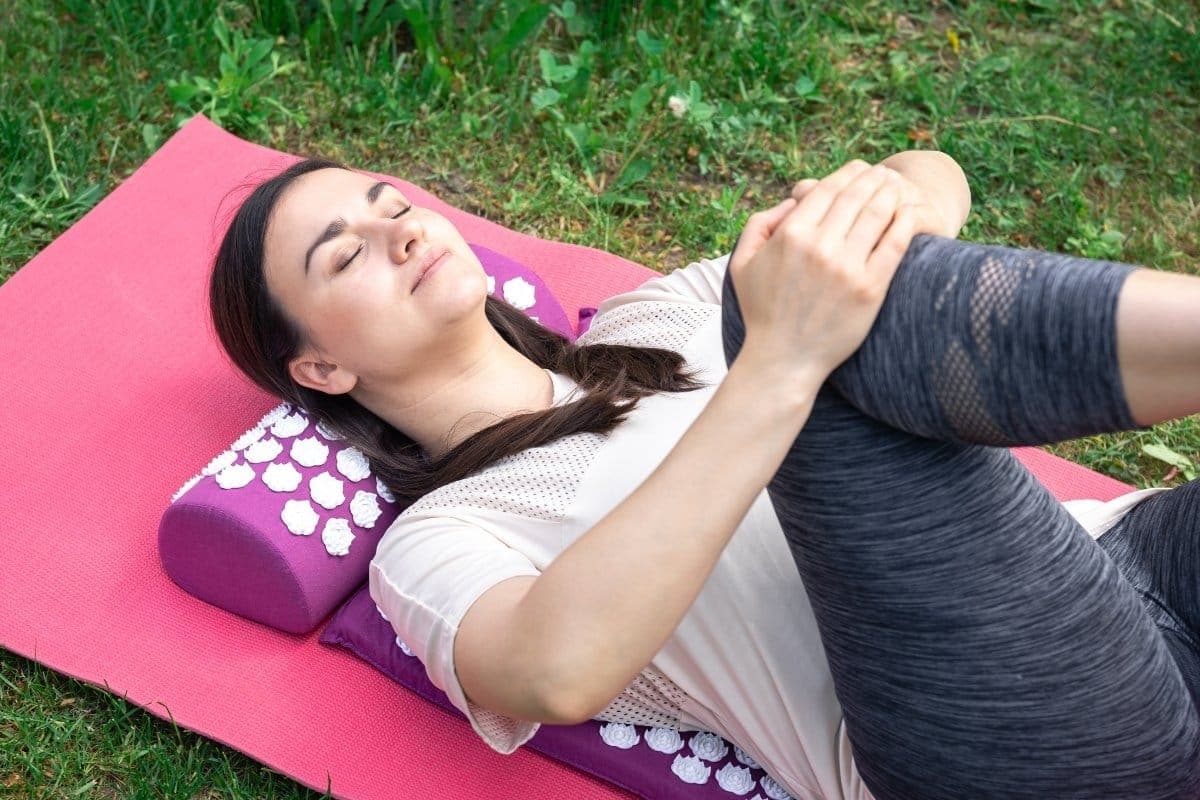
There is a range of acupressure devices available, too, with Brenda noting that wrist bands can be useful for things like nausea, travel sickness, and hay fever, while acupressure mats have the benefit of stimulating multiple points to support back pain and aid relaxation.
One 2024 study in Applied Psychology showed that regular use of acupressure mats can actually reduce perceived stress, and increase sleep quality and concentration endurance.
6. Exercise caution
As with any complementary treatment, there are considerations. Brenda notes that, when applying acupressure, you should “avoid strong pressure on open wounds, bruises, inflamed, or infected areas; varicose veins; and areas with recent surgery”.
Meanwhile, pregnant women should avoid acupressure unless guided by a professional, as it can stimulate uterine contractions. As always, anyone with a serious medical condition should always consult a professional before embarking on a personal acupressure practice.



Find a professional today
Try our guided search tool, we can connect you with over 20,000 professionals.