Discover these seasonal finds from hedgerows to gardens and woodlands
Autumn delivers a feast for foragers, with a variety of berries, mushrooms, and nuts at their peak. And not only can wild food be delicious, but some specimens are particularly nutrient-rich when picked at their best.
Here, urban ecologist Gemma Hindi, who runs foraging walks through her organisation Earthwild (@earthwildlondon) and even lived on a wild food diet as part of a health study, is letting you in on her pick of the crop for the season ahead.
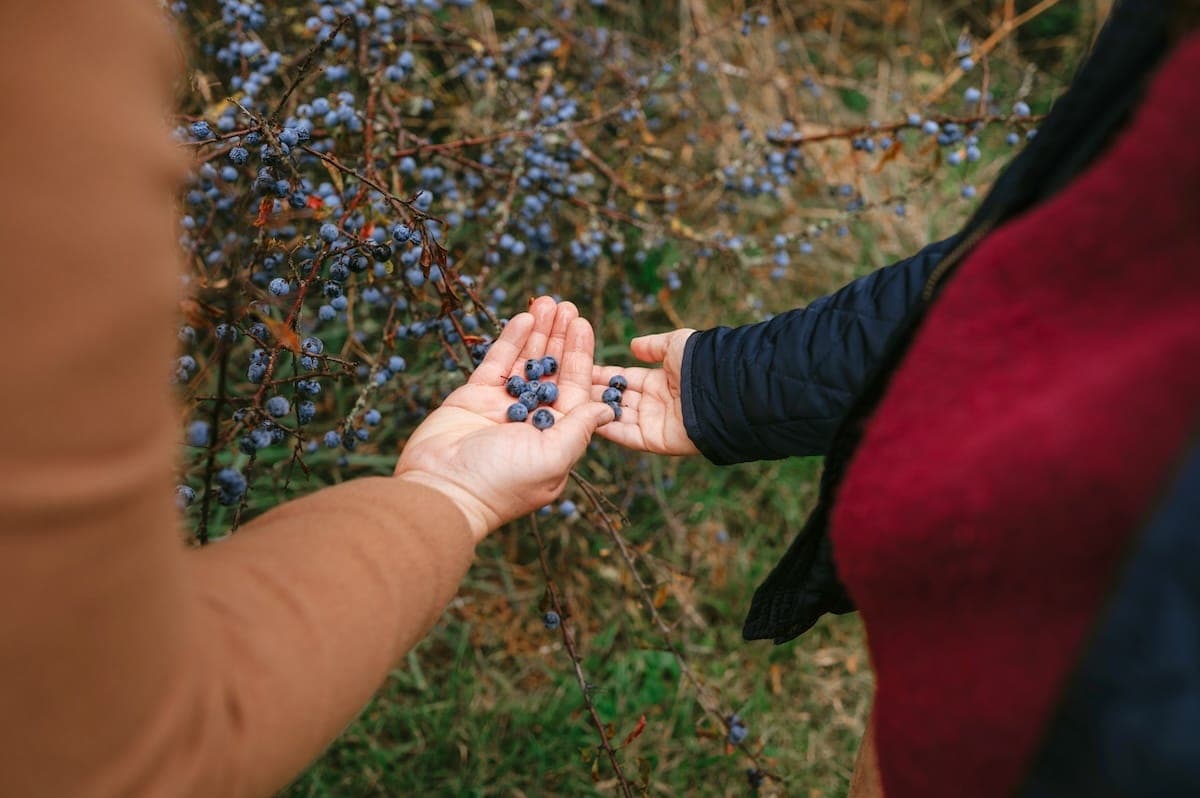
Sloe berries
Sloes are the fruit of the blackthorn, one of the first trees to flower in spring. This delicate white blossom gives way to dusky blue, marble-sized berries in autumn. They also contain vitamin C, fibre, and plant compounds that contain antioxidant activity.
“Pick them and then store in the freezer as this bursts their cells, releasing more flavour and sweetness,” Gemma recommends.
Sweet chestnuts
Chestnuts are a source of fibre and heart-healthy nutrients such as potassium and gallic acid. They are also rich in vitamins C and B6, and manganese, which is essential for bone health.
You’ll find them scattered beneath their tree, identified by its long, dark green glossy leaves with serrated edges. “Teardrop-shaped nuts with little tufts of ‘hair’ are encased in a light green shell surrounded by clustered spikes,” says Gemma. Look for shells which are already open, as these are ripe, and don’t confuse sweet chestnuts with the toxic horse chestnut (aka, the conker).

Turkey tail
A small bracket fungus, turkey tail is one of the most researched medicinal mushrooms, particularly for compounds that may affect immune function. However, much of this research concerns specific extracts rather than eating the mushroom itself, so more research is needed to understand its potential benefits as a food.
“It’s commonly found growing in horizontal clusters on rotting logs and fallen trees, from inner cities to the countryside,” says Gemma. Look for layered caps with concentric rings of varying colours (including brown, yellow, black, grey, or green) and a pale outer margin, reminiscent of a turkey’s tail. Turkey tail is traditionally steeped in hot water rather than eaten whole, as the mushroom itself is extremely tough. Wild mushrooms can be difficult to identify safely, so only consume them if you are completely certain of their identity. See images and specific identification notes at woodlandtrust.org.uk.
Dandelion roots
These yellow-headed plants are in abundance and best dug up from your own pesticide-free garden or allotment. Dandelion roots have been used medicinally for centuries and contain inulin, a prebiotic fibre that can support gut health, as well as a range of plant compounds with antioxidant activity.
Gemma says late autumn or early spring is the best time to dig up the roots: “This is when all the sugars from photosynthesis over summer move down into the roots, so they’re at their tastiest and most nutritious.”
Rosehips
These red-orange teardrop-shaped fruits are all over rose bushes in parks, gardens, and hedgerows, with colour and size varying depending on rose variety. They pack a punch when it comes to vitamin C, which supports normal immune function, and also contain fibre, vitamin E, and vitamin A, which helps maintain normal vision.
Gemma warns they require preparation to remove the seeds and irritating hairs, “but they’re one of the highest sources of vitamin C in the wild, so are well worth the effort. Rosa rugosa has the largest hips, which make a brilliant purée, that you can make by simmering until soft, then mashing through a sieve before passing through a muslin cloth to remove the hairs.” The flavour is similar to tomatoes, so use it like ketchup or spread on a pizza base.
. Never eat wild produce unless you are certain of its identity, especially wild mushrooms.
. Check whether foraging is permitted and be aware that you need the landowner or occupier’s permission to uproot any wild plant.
. Never collect any protected plant species.
. Avoid roadsides, sprayed or contaminated ground, and plants that may have been soiled by animals.
. Wash your harvest thoroughly, cook where required, and try only a small amount of unfamiliar foods at first.
. If you are pregnant, taking medication, have allergies, or live with a health condition, seek advice from an appropriate healthcare professional before eating foraged foods.
. Remember: If in doubt, leave it out.



Find a professional today
Try our guided search tool, we can connect you with over 20,000 professionals.